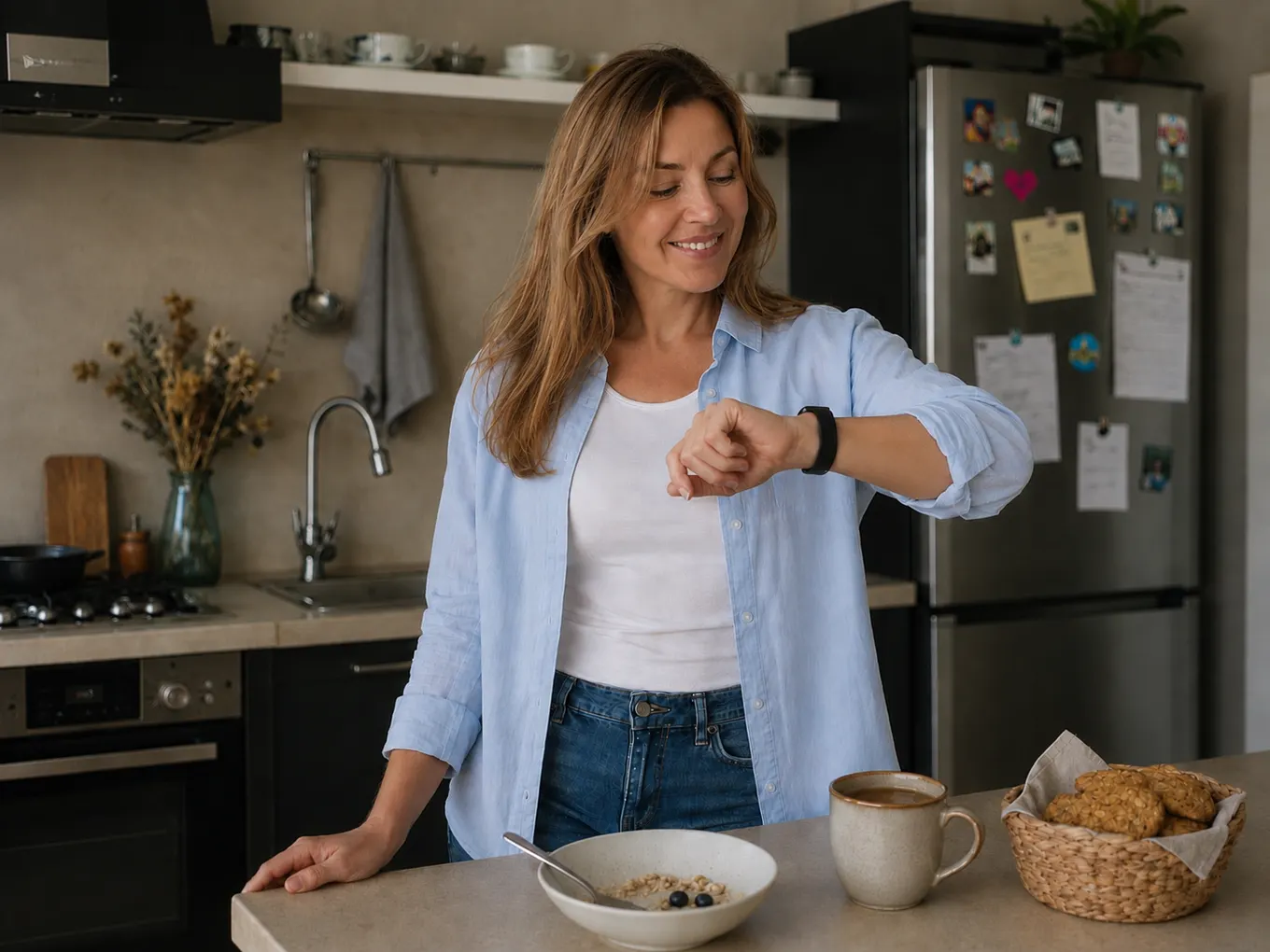
For a long time, I couldn't quite put into words what felt off.
For years, I felt a bit disconnected from my body. I thought that if I collected enough health advice, things would eventually fall into place.
I'm 49. I'm a mum of two living in a quiet suburb near Manchester. From my thirties onward, I kept looking for better ways to look after my wellbeing. I tried different routines, adjusted how I ate, followed popular tips, and tested plenty of recommendations. Some of them felt helpful for a while. Then I'd find myself wondering again what I might be missing.
After I turned 38, I began to notice that my body responded differently than before. Habits that once felt reliable became less consistent. Some days I felt steady; other days I felt drained without a clear reason. Recovery seemed to take longer, my energy varied more, and I no longer felt sure what my body actually needed.
That was the first time I asked myself: maybe I didn't need another trend to follow. Maybe what I needed was a clearer sense of how my everyday habits related to how my body felt.
That question slowly pushed me to look for answers in a different way.
What I wish I'd understood earlier
For a long time, I treated metabolism as something fixed.
You either had a "fast metabolism" or a "slow" one, and there didn't seem much to learn from it day to day.
The more I read, the more incomplete that picture felt.
Metabolism isn't one simple number. It connects with sleep, recovery, movement, stress, nutrition, daily routines, and many signals the body produces over a normal day. Those signals can shift over time, so habits that felt right in your twenties or early thirties may feel different later on.
That helped a lot of my experience make more sense.
I wasn't necessarily doing everything wrong.
I was repeating the same routine without noticing how my body had changed.
For the first time in years, I stopped asking,
"Which plan should I try next?"
And started asking,
"What might my body be pointing me toward?"
That shift quietly redirected how I looked for support.
• Short or disrupted sleep is linked with changes in glucose regulation, recovery signals and broader cardiometabolic health. Knutson, Sleep duration and cardiometabolic risk (PubMed)
• The American Heart Association notes that sleep duration and quality can influence daily behaviours and cardiometabolic wellbeing. AHA Scientific Statement on Sleep (Circulation)
• Circadian timing — including light exposure, meal timing, movement and sleep — plays a recognised role in metabolic health. AHA Scientific Statement on Circadian Health (PubMed)
A coffee chat that pointed me in a new direction

A few weeks later I took the train to London for my niece's wedding.
One morning I met my friend Rachel for breakfast.
Rachel is a nurse, and we've known each other for years. What stood out wasn't a dramatic "before and after."
She simply looked settled.
Calm.
Well rested.
More at ease with her day.
Her skin looked healthy, she smiled easily, and she didn't seem as worn out as so many of us feel in our forties.
So I asked what she'd been doing differently.
She laughed.
"Honestly? I stopped guessing quite so much."
Then she showed me the slim black band on her wrist.
It was the Hume Band 2.0.
Rachel said it wasn't another gadget pushing generic goals or chasing a perfect score. It helped her notice patterns in sleep, recovery, activity, and other everyday signals that can relate to how metabolism feels day to day.
Each morning it pointed to one or two small habits worth noticing.
Nothing extreme.
Just gentle adjustments based on how her body seemed to respond.
The idea made sense to me straight away.
Instead of only following advice written for everyone...
...I could start noticing what was happening in my own routine.
I ordered one that evening.
Learning to notice my own patterns
The first surprise wasn't a dramatic number on a screen.
It was how much I had simply never paid attention to before.
Some nights I thought I'd slept well, but my recovery signals suggested my body might still be under strain.
On other days I noticed that a short walk after lunch was followed by steadier afternoon energy.
Going to bed about forty-five minutes earlier seemed to matter more than I expected.
A more balanced breakfast helped me feel focused and comfortable for longer.
None of these adjustments felt demanding.
The difference was that I could see patterns instead of relying on guesswork alone.
Each morning the app shared a short summary in plain English.
What looked better.
What had shifted.
And one small idea for the day.
Sometimes it was:
"Take a 15-minute walk after lunch."
Another day it suggested:
"Try eating dinner a little earlier tonight."
Or:
"Spend some time outside within the first hour after waking."
No pressure.
No guilt.
No unrealistic targets.
Just one manageable habit at a time.
• Walking after meals can support the body's post-meal glucose response compared with activity that is not timed around meals. Reynolds et al., Diabetologia / PubMed · Bellini et al., postprandial walking (PubMed)
• Balanced, protein-containing breakfasts have been studied for their relationship with morning energy, satisfaction and appetite-related signals. Leidy et al., AJCN / PubMed · Rains et al., breakfast protein (PubMed)
• Morning light and consistent timing cues help synchronise circadian rhythms that influence metabolic processes. AHA Circadian Health Statement
Small habits that were easier to keep

Within a couple of weeks, my daily routine began to shift almost without me forcing it.
- Morning sunlight before coffee
- A short walk after lunch
- More balanced meals during the day
- Earlier dinners
- A steadier bedtime
None of those ideas were new.
I'd heard most of them before.
What felt different was seeing how they related to my own patterns — instead of reading another generic wellness article.
That made them easier to stick with.
The app wasn't pushing me toward a perfect lifestyle.
It simply helped me notice what seemed to support me, and gently encouraged me to repeat it.
Over time, those small steps started to feel automatic.
More than a set of numbers
What surprised me most wasn't any single reading.
It was how I began to think about my wellbeing.
I stopped obsessing over doing everything perfectly.
I became more curious.
Instead of asking,
"Did I follow every rule today?"
I found myself asking,
"What seemed to help me feel better today?"
That change in mindset alone eased a lot of frustration.
For years I had treated my body like a problem that needed fixing.
Now I was finally paying attention to it, instead of working against it.
Looking back
About six months on, I noticed differences that mattered more to me than any single score.
My energy felt steadier through the day.
Sleep felt more consistent.
Recovery felt a little easier.
My routine felt simpler to maintain because it actually fitted my life.
Most of all, I stopped feeling as though my body was working against me.
For the first time in a long while, it felt more like we were on the same side.
And for me, that's what the Hume Band helped with most.
Not another rigid programme.
Not another big promise.
Just a clearer understanding of my own patterns — and more confidence to build habits that made sense for me.
• Sleep: Insufficient sleep is associated with higher cardiometabolic risk; improving sleep is recognised as a lifestyle factor for metabolic health. AHA — Sleep Duration and Quality (Circulation) · Sleep Deficiency and Cardiometabolic Disease (PubMed)
• Regular activity: Physical activity supports cardiometabolic health and is a core recommendation in public-health guidelines. Exercise, Physical Activity, and Cardiometabolic Health (PubMed) · WHO Guidelines on Physical Activity
• Consistent daily routines: Aligning light, meals, movement and sleep with circadian biology is linked with healthier cardiometabolic patterns. AHA — Circadian Health Statement
• Post-meal movement: Short walks after eating can support a more balanced postprandial glucose response. Meta-analysis: exercise timing around meals (PubMed)